


This week’s news round up covers the latest developments in the drone delivery sector, how drones have become the best tool for land conservation in rural Colorado, and a new license plate-reading drone that poses issues for civil liberties groups.
Matternet and Beeline UAS Partner for Expanded Drone Delivery
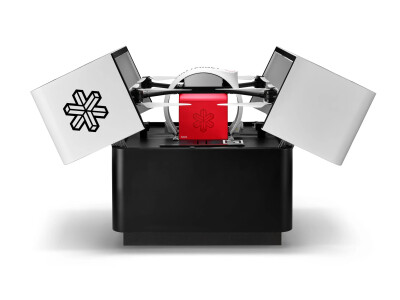
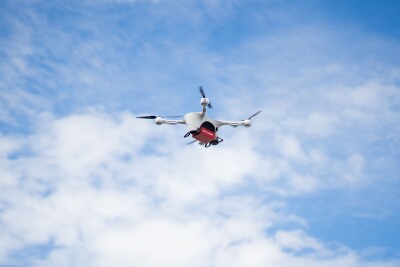
Matternet, the only FAA Type-Certified drone delivery platform, has partnered with Beeline UAS to expand its commercial drone delivery network. Operating under its own FAA Part 135 air carrier certificate, Beeline will run Matternet's technology in the San Francisco Bay Area and Los Angeles, focusing on Beyond Visual Line of Sight operations for food, retail, and healthcare delivery-as-a-service customers. Beeline becomes the third Part 135 operating partner in Matternet's network, joining Ameriflight and UPS Flight Forward.
The partnership reflects Matternet's multi-operator strategy, which aims to give the company the operational capacity and geographic flexibility needed to scale commercially while maintaining safety and regulatory standards. Executives from both companies framed the deal as a step toward making drone delivery more widely available across congested, high-labor-cost urban markets, with Matternet citing its decade-plus operating history and Beeline emphasizing its focus on compliant, scalable UAS operations.
Drones Become Essential Tool for Conversation Work in Rural Colorado
The White River and Douglas Creek Conservation Districts in rural northwest Colorado are building a Drone Services Program to support agriculture, watershed management, and land stewardship. The program focuses on technical conservation work like high-resolution mapping, orthomosaics, terrain modeling, and infrastructure inspections to help monitor hard-to-access resources like irrigation systems, streambanks, rangeland, and wildfire-impacted watersheds. The goal is to give rural landowners and land managers, who typically lack access to such technology, affordable and practical aerial data to support decision-making.
The initiative is structured as a hybrid model combining grant funding, fee-for-service work, and agency partnerships, with an emphasis on long-term sustainability rather than building a standalone tech venture. District leaders see drones as a way to amplify existing field expertise rather than replace it, addressing growing challenges like drought, aging infrastructure, wildfire risk, and invasive species. The article frames rural conservation districts as an overlooked but potentially significant frontier for drone technology, offering a model for how small, resource-limited organizations can use emerging tools to tackle practical land and water management problems.
Flock Safety Launches License Plate-Reading Drone
Flock Safety has unveiled Alpha, its first U.S.-built quadcopter drone, designed for police departments that can no longer use DJI hardware under federal restrictions. This drone is equipped with a combined optical/thermal/laser-rangefinder sensor package, plate-reading capability from roughly 2,000 feet, and a dock system that swaps batteries for a sub-90-second relaunch. Alpha is built to plug into Flock's existing nationwide network of fixed ALPR cameras, which already supports AI-driven natural-language searches of vehicle movement data.
That integration is where scrutiny intensifies. Civil liberties advocates argue that Flock's system, despite company assurances that it tracks vehicles rather than people, effectively enables mass surveillance given how central driving is to daily life. The Electronic Frontier Foundation's review described the network as designed to enable mass surveillance and vulnerable to serious abuses, and documented issues including cross-jurisdiction data sharing, false hits from outdated plate records, and officer misuse.









Comments