

Contributed by Drew Weston, CPP, Enterprise Control Specialist for Federal Markets, Motorola Solutions
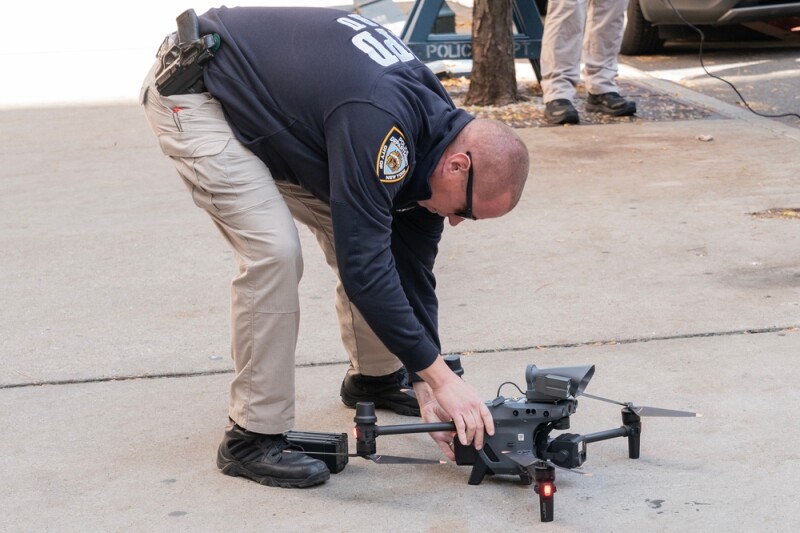
Over 10,000 agencies worldwide have dedicated drone programs responsible for search and rescue, disaster relief, and establishing situational awareness before responders arrive on scene.
As adoption expands, public safety agencies face crucial operational questions about how drone use fits into response workflows and data streams.
Teams must determine how to integrate live feeds into existing workflows and navigate complex regulatory frameworks before a drone ever takes flight.
Key takeaways
- When should agencies dispatch a first responder drone?
Public safety agencies need clear rules for launching first responder drones. This prevents unnecessary flights and reduces operational risk. Before sending a drone, agencies should evaluate five main factors.
- How do agencies integrate drone data into workflows?
Drone-as-a-first-responder workflows rely on infrastructure that delivers actionable intelligence to ground teams. By sharing real-time video, agencies ensure live drone data directly drives field decisions.
- Deconfliction with aircraft and other drones.
Deconfliction with aircraft and airspace safety requires coordinated communication protocols between drone operators and local air traffic control.
- How do agencies comply with regulations, increase public trust and measure success?
To build public trust, agencies must enforce strict privacy policies, measure success by how effectively drones reduce scene uncertainty, and treat every public complaint as a driver for improvement.
Deciding When to Deploy a Drone
Drone use in public safety requires more forethought than simply placing a device and sending it into the sky.
The logistical complexity of drone operations limits the situations they suit. Proper communication channels must be in place, with operators at each step ready to collect and relay information as quickly as possible.
Use these five questions to evaluate whether an incident meets launch criteria for a (DFR) Drone as a First Responder program:
- Do the conditions on the scene pose a safety risk to humans, either responders or the general public?
- Is the location difficult to navigate on foot, inaccessible by vehicle, or otherwise remote?
- Will a drone arrive before or alongside responders?
- Are the skies above the location approved airspace, and are the necessary permits and authorization in place?
- Does the expected benefit of the drone outweigh the resource costs of deployment?
It’s also worth establishing whether the drone will be flown BVLOS, and how that changes real-time coordination with an operator outside the scene.
Answering these questions helps prevent drone over-deployment and minimizes operational risk. Of course, emergencies are rarely clear-cut: fires can spread, visibility can change and the scope of a missing persons search can quickly expand as authorities learn new information.
A situation may evolve to require the use of drones, so some flexibility and foresight are required to make the correct call. Rather than leaving this up to guesswork and gut instinct, refer to established protocols and guidelines such as those published by the National Institute of Justice and the Federal Aviation Administration.
Building Drones into Workflows
Having eyes in the sky only matters if the information it gathers reaches the right people. There are already issues with relaying information in public safety pipelines, such as those evident between emergency dispatchers receiving 9-1-1 calls and the information given to first responders.
Dispatchers must make judgment calls based on incomplete, fragmented context. Adding a layer of data to this process without thoughtful planning only further complicates the chain. Agencies must establish dedicated roles for processing drone data rather than overloading already stretched-thin personnel.
Beyond communication logistics, agencies must integrate drone software with broader computer-aided dispatch, mapping and other command systems. During search-and-rescue operations, location data pinpoints lost or injured civilians faster and more accurately than a drone operator's visual observation.
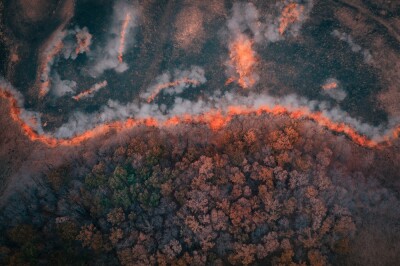
Sharing live drone video provides precise, real-time context, such as potential fire paths or hidden hotspots, that directly informs response efforts.
To build DFR into your workflows, ensure your technical and communications infrastructure meets these five criteria:
- Who is responsible for monitoring drone feeds?
- Who decides which information is significant enough to relay to ground teams?
- Which systems and channels should drone intelligence pass through?
- Can the pilot perform additional duties, such as communication, or is the operation complex enough to warrant additional staff?
- Is there a backup plan for a drone losing connection?
These questions help form the basis of a strong drone-to-responder workflow and provide a basis to assess whether the drone contributed to the operation.
Deconfliction With Other Drones and Aircraft
As we’ve seen over the past few years, drones in the airspace can create real problems with operations. In one case during the response to the 2025 California wildfires, a drone struck a fixed wing aircraft responding to the fire. More recently, an approved drone operating in a TFR at a top-10 college football game matchup narrowly missed a helicopter.
Both aircraft were approved to be there, so how did such a close call occur? That’s where the deconfliction portion of a DFR program comes in.
Any modern day DFR program should come with awareness and deconfliction of the airspace. In practice that means a DFR program should include a drone detection program which integrates with FAA’s ADS-B (Automatic Dependent Surveillance-Broadcast). That also means that DFR operators, especially those with a BVLOS program, must have a way to communicate with FAA-approved aircraft channels.
As the proliferation of drones continues to scale, the lines between a drone program and a drone detection program will blur. There is no faster way to shut a program down than by being the part at fault in an aircraft collision.
Regulations, Trust and Measuring Success
Public safety drones are subject to airspace regulations, operational restrictions and privacy laws. Compliance must be a core consideration in their daily use.
Agencies are required to have clear policies regarding when and where a drone can fly, what footage it captures, how long it is stored and additional thresholds for when videos become official evidence in an investigation.
Because public trust remains a primary barrier to public safety drone programs, these regulations aim to protect privacy and improve flight safety. This forces agencies to be more precise in deployment and more intentional in how they measure success.
Meeting these requirements is only half the equation — agencies also need to prove the program is working.
To increase public trust in the use of public safety drones, ask these five questions:
- How often does a drone reach a scene before responders?
- Did the drone reduce human exposure to hazards?
- Is footage accessed, stored and deleted in accordance with data protection laws?
- Do reviews show that drones produced useful information at the right point in time?
- How often are flights unsuccessful, either due to weather or equipment problems?
While response times and launch frequency are metrics worth considering, for drone programs to succeed, they must demonstrate that they reduce uncertainty and perform consistently. To build and maintain community trust, agencies should track every complaint and operational issue, treating them as critical drivers for improvement.
Using Drones to Improve Public Safety and Real-Time Response
Drones can map out a scene before responders arrive, scout from an aerial vantage point and navigate dangerous environments without risking the safety of crew members, but these capabilities only enhance response if they work alongside existing workflows.
The goal is to reduce confusion by providing clear, real-time situational awareness. To achieve that, agencies must evaluate the practicality and compliance of their drone programs. Evolving incidents require clarity and coordination at every stage of the response. A drone's ability to contribute depends on the thoroughness of the strategy behind its use.
About the Author
 Drew Weston, CPP, works for Motorola Solutions as an enterprise access control specialist for federal markets. He is the former director of national accounts for Mobile Communications America, a national systems integrator for security, voice, and data solutions for public safety customers and enterprise organizations. Weston also serves in his volunteer capacity as the chair of the UAS/C-UAS Cross Sector Council for Infragard National Members Alliance. He is a technology evangelist in the security industry, helping federal, state, and commercial clients understand how new technologies impact security programs and business processes.









Comments