

This week’s news roundup looks at a project to build drones specifically for tracking whales, a deeper look into our conference sneak peek for Commercial UAV Expo 2026, and signals toward a new global supply chain.
Harvard Students Build Drones for Tracking Whales
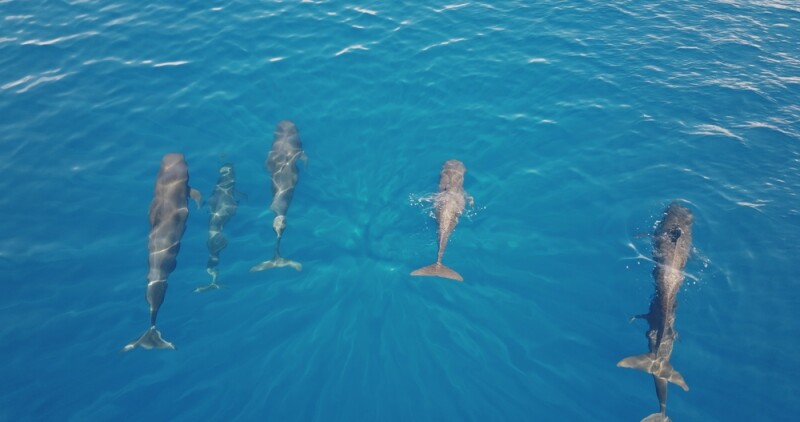
As part of their senior project, Harvard mechanical engineering students Kuma McCraw and Mikaya Parente have built a fixed-wing eVTOL drone specifically designed to track sperm whales in Dominica. The drone, which the duo designed, fabricated, and tested, does not need a runway for takeoff. Instead, it launches vertically from a research vessel for long-duration operation.
Traditionally, this work has been difficult to complete as the tagging system used for these whales is done with VHF transmitters, meaning measurements must be collected from multiple positions to estimate a whale’s location. That work is mostly done with quadcopter drones, presenting limitations around flight time, energy efficiency, and antenna configuration. In the article linked above, the pair details how they started this project, what it entailed, and how long it took.
Previewing Commercial UAV Expo’s 2026 Conference Slate
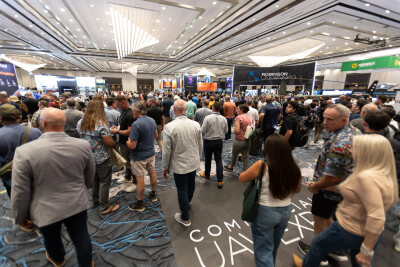
Commercial UAV Expo 2026 is returning to Las Vegas September 1–3, and the conference program has shifted away from early-adoption debates toward the harder, more specific questions facing operators today.
Writing for Autonomy Global, Commercial UAV News Content Manager Matt Collins offers a sneak peek at what attendees can expect this fall. The program spans regulatory implementation, workforce preparation, vertical applications, and market strategy — with BVLOS taking center stage across two dedicated sessions examining both its broader operational implications and practical UTM integration.
Additional sessions tackle NDAA compliance, scaling drone programs within DOTs and AEC firms, the talent pipeline challenge, and where the next wave of commercial UAV market growth is actually coming from.
Signals Toward a Changing Global Supply Chain
Nigeria-based Terra Industries is building a drone manufacturing operation that could represent a third path in the global supply chain, one that sits outside both Chinese-dominated mass production and the higher-cost, compliance-focused Western market.
Writing for DroneLife, Miriam McNabb covers how the startup is scaling toward 30,000 units per year from a facility near Abuja, producing airframes, propellers, and battery systems in-house. The company pairs its hardware with ArtemisOS, an AI-driven software platform that requires an active subscription to operate. Terra's drones are reported to be up to 55 percent less expensive than comparable international systems, and the company has already begun exporting to several African markets and Canada. Two rapid funding rounds in early 2026 — totaling roughly $34 million — from investors including 8VC and Lux Capital signal strong backing for the model.











Comments