
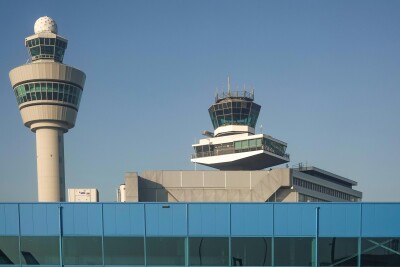
As we approach the end of 2025 and the beginning of a new year in which we all trust Part 108 will be finally enacted, I would like to explore what a future National Airspace System (NAS) will look like when drones are controlled by Uncrewed Traffic Management (UTM) systems and traditional aircraft continue to use radar and voice commends through air traffic controllers (ATC).
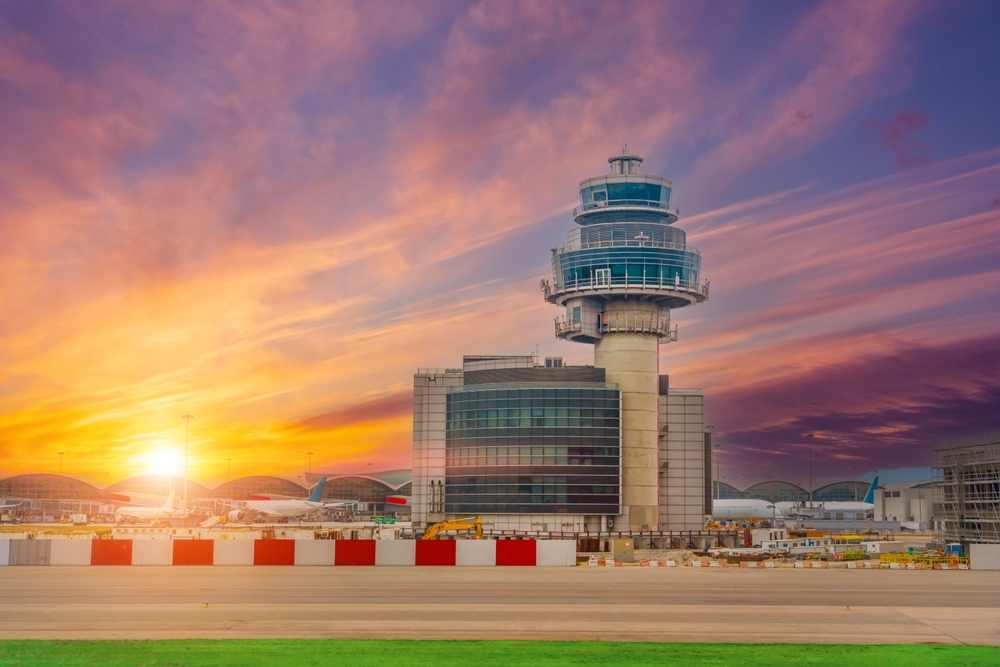
The recent announcement by Secretary of Transportation Sean Duffy that Peraton, a leading IT company, has been named prime integrator for the development of the new ATC system brings hope that by the time there is a full integration, ATC will look very different and somewhat more modern. The project, known as the Brand New Air Traffic Control System or BNATCS, aims to replace radar, telecommunications networks, automation tools, and aging control-center infrastructure across the NAS by the end of 2028.
For more than a century, the skies have been managed by human controllers guiding crewed aircraft through voice communication, radar surveillance, and increasingly sophisticated digital tools like Controller Pilot Data Link Communications (CPDLC). However, the rapid rise of drones, autonomous aircraft, and emerging eVTOL platforms has introduced a new challenge to airspace management. These vehicles, often operating at low altitudes and in large numbers, cannot be managed through traditional ATC methods alone. Instead, they require a parallel system, UTM, designed to handle scale, automation, and digital coordination. The challenge of the coming decades will be to integrate these two dissimilar technologies into a seamless framework that allows crewed and uncrewed aviation to safely share the NAS.
UTM fundamentally differs from ATC in its architecture and philosophy. While the latter relies on human controllers issuing clearances and instructions to pilots, UTM is built around automation, data exchange, and digital deconfliction. Drone operators submit flight plans electronically, receive automated authorizations, and rely on algorithms to reroute or delay flights when conflicts arise. This system is designed to scale thousands of simultaneous operations, something that would overwhelm human controllers if attempted through voice communication. However, UTM cannot exist in isolation. Drones will increasingly operate near airports, in controlled airspace, and alongside crewed aircraft. That means UTM must share data with ATC, and ATC must be able to monitor and understand drone activity in real time.
The interaction between UTM and ATC will revolve around shared situational awareness. ATC systems will ingest feeds from UTM platforms, displaying drone traffic alongside traditional radar and Automatic Dependent Surveillance–Broadcast (ADS-B) targets. Controllers will not be expected to manage every drone directly, but they will need to know when drones are operating near crewed aircraft, particularly in sensitive areas such as approach and departure corridors. Simultaneously, UTM systems will need to incorporate ATC restrictions, ensuring that drones do not enter controlled zones without authorization. This two-way exchange of information will allow both systems to maintain safety without duplicating responsibilities.
NASA’s UTM project has already demonstrated the feasibility of this approach. In a series of trials, drones operating below 400 feet were managed through digital services that automatically deconflicted flight paths. These services were able to exchange data with ATC systems, ensuring that controllers were aware of drone activity without being burdened by direct management. Building on this foundation, NASA and the FAA are developing what they call Extensible Traffic Management, or xTM, which is designed to support not only drones but also new entrants such as eVTOL air taxis and high-altitude long-endurance drones. The goal is to develop modular architecture that can evolve as new technologies emerge, while maintaining interoperability with ATC.
Other demonstrations have reinforced the practicality of UTM/ATC collaboration. At the New York UAS Test Site, the Defense Innovation Unit oversaw trials in which drones equipped with mesh radios and satellite links shared telemetry with the CLUE UTM system. This system integrated ADS-B and radar feeds, creating a unified traffic picture that resembled ATC surveillance but included both crewed and uncrewed aircraft. The result was a level of situational awareness that allowed safe deconfliction without requiring controllers to micromanage drone flights. Such demonstrations show that UTM can provide ATC with the visibility it needs, while retaining its automated character.
The FAA’s evolving concept of operations for BVLOS drone flights also envisions routine integration with ATC. Under this framework, drones operating near controlled airports will automatically notify ATC systems of their presence. Controllers will not issue clearances to drones in the same way they do for crewed aircraft, but they will be able to see drone activity and anticipate potential conflicts. This ensures that ATC retains authority over controlled airspace while allowing UTM to manage the bulk of drone operations digitally. The FAA’s modernization program, known as NEXTGEN which will replace legacy radar and communications with digital infrastructure, is expected to further enable direct interfaces between ATC and UTM systems. In the future, controllers may see drone traffic displayed seamlessly alongside crewed aircraft, with automated alerts when conflicts arise.
The implications of this integration are profound. Automated deconfliction will reduce ATC workload, allowing controllers to focus on managing crewed aircraft while UTM reroutes drones digitally before conflicts occur. Integrated surveillance will give ATC visibility into drone operations, ensuring that controllers are never surprised by uncrewed traffic. Scalable operations will allow thousands of drones to operate simultaneously without overwhelming human controllers. And unified safety standards, developed by organizations such as the International Civil Aviation Organization and the FAA, will ensure that interoperability extends across borders, allowing drones and crewed aircraft to share skies globally.
The vision of a shared sky is not without challenges. Technical hurdles remain in ensuring reliable data exchange between UTM and ATC, particularly in areas with limited connectivity. Regulatory frameworks must evolve to define responsibilities and liabilities when drones and crewed aircraft interact. Cultural adaptation will also be necessary, as controllers accustomed to direct management learn to trust automated systems that handle drones independently. Yet the trajectory is clear: UTM and ATC will not merge into a single system, but they will interoperate through digital data exchange, shared situational awareness, and coordinated procedures. This hybrid model allows drones to scale safely while preserving ATC’s role in managing crewed aviation.
Looking ahead, the integration of hydrogen-powered drones and hybrid propulsion UAVs adds another layer of complexity. These aircraft, capable of longer endurance and heavier payloads than battery-powered drones, will likely operate in corridors that overlap with eVTOL air taxis and even traditional aircraft. UTM systems will need to manage these operations with precision, ensuring that hydrogen-powered UAVs can safely coexist with other traffic. ATC will play a role in overseeing transitions into controlled airspace, particularly when these drones operate near airports or in higher-altitude corridors. The convergence of propulsion innovation and airspace management underscores the importance of building flexible, interoperable systems that can adapt to new technologies.
Ultimately, the future of aviation will be defined by collaboration between human controllers, a more broadly use of CPDLC for operations over land and automated systems. ATC will continue to provide the human judgment and authority necessary to manage crewed aircraft, while UTM will deliver the automation and scalability required to manage drones. Together, they will create a safer, more efficient sky in which crewed and uncrewed aviation can coexist. The path forward is not about replacing one system with another, but about building bridges between them, ensuring that the skies remain safe as they become more crowded and more diverse.
Our immediate challenge is where and how to start the real trials in which an automated system handles drones and air taxis, while ATC continues to direct traditional aviation using radar and voice commands. The next two years will be instrumental in the eventual full integration of crewed and uncrewed aviation in the NAS, and eventually the world.






Comments