

Sponsored by agGRO
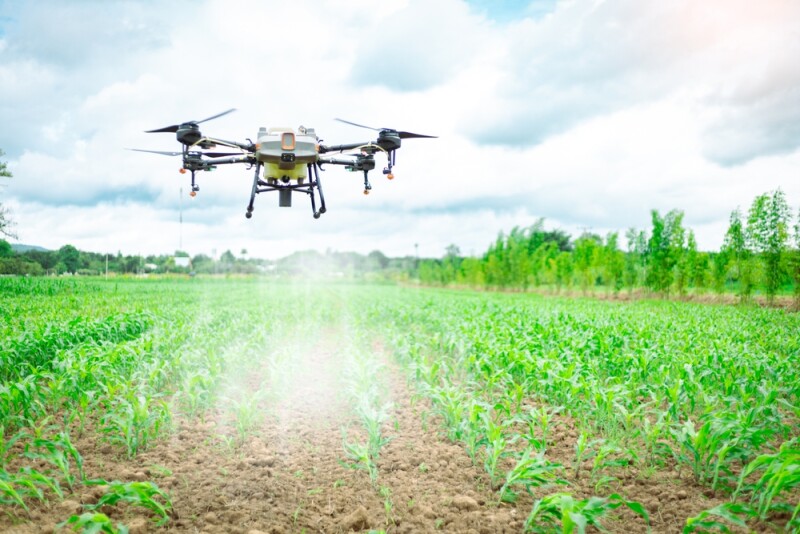
As has been covered here and elsewhere in the industry, there has been a rapid expansion of drone use across the agricultural sector in the U.S. in recent years. While UAV-based applications for mapping and monitoring crops have long existed, spraying applications have become much more mainstream in recent years. Thanks to broader acceptance of the technology in the industry, technological advancements that make operations more feasible, and, of course, the proven value the tool brings to a vital and often low-margin industry, more spray drones are being used in nearly every region than ever before.
That, however, doesn’t mean that it is simple for anyone, be it a service provider or a grower themselves, to get their foot in the door. Given the complexity of the platforms required for this work compared to, say, a simple photography drone, the cost of the tools themselves is a massive barrier for potential operators looking to get started. Cost concerns accompany the purchase of any airframe, and, like most other verticals, the agricultural industry largely relies on foreign-made platforms. New tariffs put in place by the White House now impose 100 percent tariffs on Chinese-made drones over 55 pounds, which account for most spray drones on the market, and 25 percent tariffs on drones under that weight. In other words, while there is clear value in the technology and profits to be made by those who operate them, the initial funding is a significant barrier for most.
Unfortunately, many traditional lenders are still not a viable option to cross that barrier. For most growers, these lenders are the go-to for any new equipment needed for their operations, and tools like a tractor or a combine are generally no problem to finance. Generally speaking, financing options for agricultural drones have not caught up to those for conventional farm equipment. Although there is little debate around how much value drones can provide, there are still unanswered questions from the lenders’ perspective. Specifically, how long a drone will remain viable – both in terms of maintenance and upkeep and technologically – is a major question that leads most lenders to place them in a different risk category than traditional equipment.
It’s also worth noting that most operators purchasing an agricultural spray drone are either small operators or working farmers. While that’s not necessarily true across the board, there aren't many fleet-scale enterprises operating in this space. In other words, many of the operators looking to procure this equipment may need financing to make the initial investment, particularly as they enter a relatively new and rapidly evolving segment of the industry. All of which is to say, the lack of readily available financing options for this market is a significant barrier to it reaching its full growth potential.
This is where agGRO comes in as an online lending platform specifically for the agricultural industry, providing real options for those looking for help with their spray drone investment. In a recent conversation with Commercial UAV News, Emily Rischling from the agGRO team shared that the company began as a digital platform for equipment loans in partnership with a local John Deere dealership. About two years ago, however, they began expanding into drone financing after recognizing a gap in the space.
More recently, toward the end of 2025, they were acquired by Security First Bank (Member FDIC), marking a significant step in the company’s evolution. As a result of the acquisition, agGRO shifted from a third-party relationship to being fully owned by Security First Bank, a community bank with more than 128 years of experience serving agricultural producers and rural communities throughout the Midwest. That said, Rischling noted that operators from across the U.S. work with agGRO, not just in the Midwest, and that there is a fairly even split between service providers doing spray work and growers financing drones for their own operations.
As for how the actual financing works from the borrower’s perspective, it's fairly straightforward and operates similarly to most loans. agGRO offers financing options designed specifically for agricultural drone purchases, with terms based on the individual financing request. Crucially, Rischling noted that there are no penalties for early payment.
The process of securing financing is also not a huge lift for an operator or organization and, in many cases, can be turned around in just a couple of business days once all the documentation is in. Some important points to remember for these financing deals, though, are that agGRO only covers hardware and accessories, not things like marketing costs or regulatory support.
agGRO’s emergence in this market comes at a critical time for the agriculture industry. We know that drones, and spray drones in particular, add massive value to the work being done on farms across the U.S., but the initial cost to get started in the space, combined with a dearth of traditional financing options for the technology, is preventing much of that value from being realized. The financing process from agGRO, backed by a community-based bank in the heart of the agricultural industry, is a welcome addition to the sector.
As Rischling put it, “We don’t want it to be a huge headache for these operators to get financing.”










Comments