

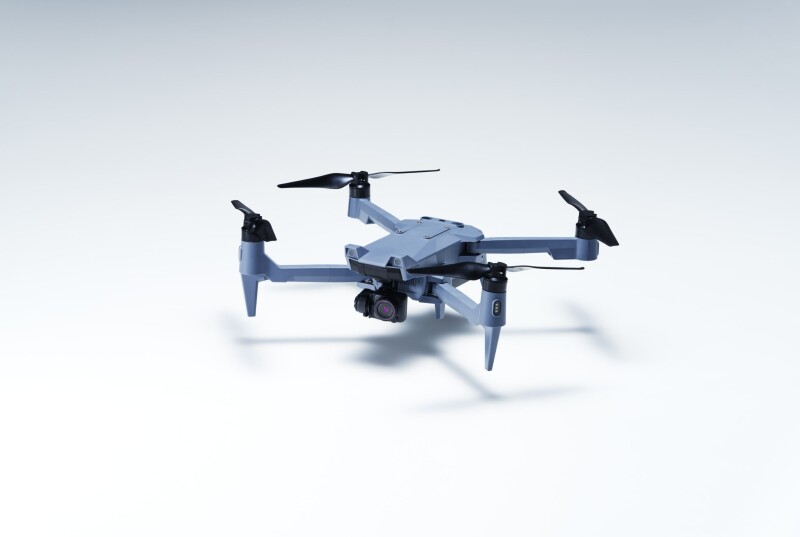
Contributed by Chris Raabe, Global CTO of ACSL
The drone industry is at a crossroads. Geopolitical tensions, supply chain uncertainty, and the ever-changing regulatory landscape have created an environment where ambiguity is the new norm. It’s not uncommon to see commentary that oversimplifies just how complex our industry is. If drone solution providers are going to address the needs of the industry, collaboration, not isolation, is the path forward; and pilots can help shape what the next era looks like.
Today’s commercial drone market is fragile. When one player is effectively the market, any disruption to that platform can cripple the entire user base. Regardless of how well the product performs, it makes our industry, and our ability to do our jobs, vulnerable if there simply aren't viable alternatives. That industry fragility isn’t hypothetical anymore; it’s something operators, integrators, and manufacturers are actively grappling with today. There are many reasons that led to our current situation. Whether someone likes or dislikes how we got here, it doesn’t change the fact that we need a solution.
For as long as I have been at ACSL, I have heard comments like– Why don't you just copy DJI? The idea that any one country or company can simply swoop in with a complete, vertically integrated drone manufacturing capability overnight is unrealistic. Manufacturing advanced unmanned systems isn’t just about capital investment; it requires decades of specialized know-how, deeply embedded supply chains, and a skilled workforce that takes years and incredible effort to acquire. Ignoring that reality risks replacing one fragile system with another.
A useful historical parallel is the 1986 US-Japan Semiconductor Agreement. The policy aimed to limit the import of Japanese RAM chips into the US, hoping to encourage on-shoring manufacturing. It resulted in several painful years of development delays and cost-overruns for US infrastructure projects that involved modern computing. We saw this again in 2020 when the US mandated the "rip-and-replacement" of Huawei and ZTE network equipment. 5 years later, the effort is billions over budget due to the lack of affordable domestic or allied alternatives. Many rural 911 systems still rely on banned equipment to maintain critical services. These outcomes were avoidable. A more strategic approach, one that brought in trusted partners and allied countries as viable options for replacement, could have mitigated budget issues, disruption, and accelerated the completion of the mandate.
This is where collaboration comes in, not as a buzzword, but as a necessity. No single company outside of the market leader has the scale and resources to solve these challenges alone. But together, manufacturers, software providers, payload developers, and allied nations can build something stronger: a diversified, interoperable ecosystem that reduces dependency while accelerating innovation.
This collaboration must extend beyond borders. Trusted allied countries like Japan and Taiwan already play critical roles in advanced manufacturing and technology development. Working together with these partners allows the industry to distribute risk, share expertise, and create resilient supply chains without sacrificing quality or security.
The future of drones isn’t just about who can cram the most features into a single airframe. What matters most is the ability of the drone to perform the task at hand while meeting the demands of the organization's procurement, and security policies. When hardware manufacturers, software providers, and service companies work together and focus on those end results, everyone wins– especially the customer.
There’s also a commercial reality we can’t ignore: innovation requires sustainable resources. Companies can’t invest indefinitely in research and development without sustainable business models that account for the real cost of labor, materials, and certifications that are necessary every time there’s a new partner integration. We need the help of the entire drone industry– especially the customer.
Operators play the most important role in shaping what kind of industry ultimately emerges. Choosing to support companies that listen to their customers and take a collaborative approach is, in effect, supporting the creation of an ecosystem that can adapt, evolve, and withstand disruption. It enables manufacturers and software developers to reinvest in deeper integrations, higher performance, and long-term reliability rather than attempting to solve every problem in isolation. There will inevitably be an uncomfortable transitional period while supply chain gaps are filled by vendors that meet the security needs of organizations; but looking past that, the result will be a resilient and thriving industry.
Drone solution providers need better coordination among ourselves. Specialization, interoperability, and shared purpose will do far more to strengthen the market than fragmentation ever could. At ACSL, we’re focused on a few core strengths. One example is our world-class proprietary flight controller, which can be integrated into a host of airframes, including non-ACSL systems. As we build out the technology behind that, we’ll look to partner with leaders in specific areas of production– from component suppliers to mission software.
We also launched a technical integration with drone maker Draganfly. ACSL payloads, like SAMO, our dual thermal-optical system, can be used on Draganfly drones. Lastly, ACSL is launching new developer tools, including an API and SDK, enabling customers to integrate ACSL SOTEN into their own internally developed software and workflows. This gives organizations greater flexibility to build custom applications, automate operations, and seamlessly connect SOTEN with existing systems and platforms. In an era of uncertainty, collaboration isn’t just the safest option, it’s the most viable one.
Our industry already has a growing list of highly specialized players looking to work together to solve the needs of customers. The challenge is that meaningful collaboration not only requires resources, but time as well. Integrating systems, validating performance, and meeting regulatory requirements all demand significant effort, and those costs exist long before a finished solution reaches the market. There is an urgency to expedite this given recent regulatory changes and the void forming in the supply chain.
If we want a drone industry that endures, adapts, and serves real-world needs, we must build it together.










Comments